
Meet the Surgical Robot in Torrance That Lets Doctors Feel What They're Doing |
Providence Little Company of Mary Medical Center Torrance highlights the da Vinci 5 surgical system, featuring 3D imaging, advanced instrument control, and technology that provides feedback about pressure on human tissue. |
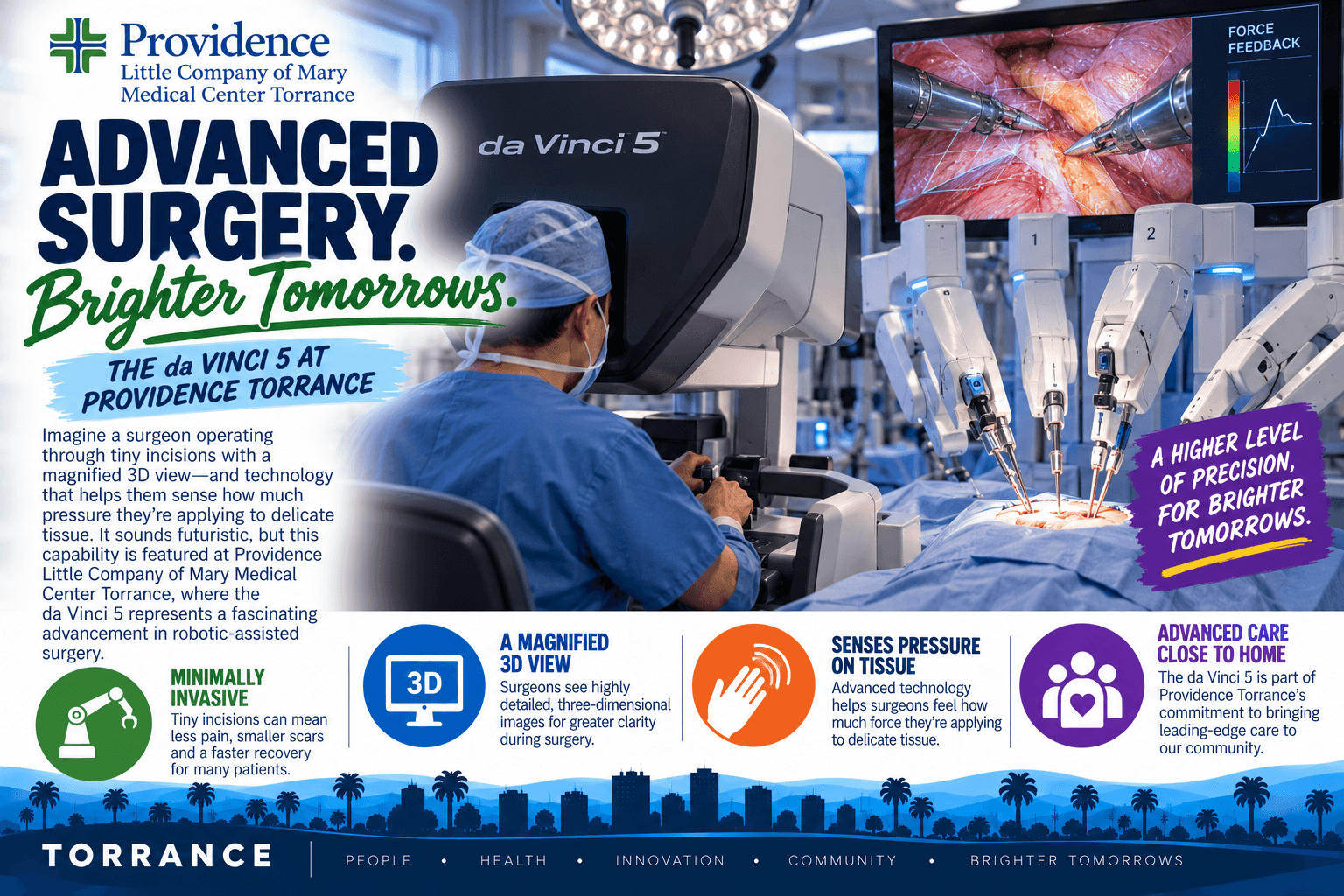
The Operating Room Is Changing—and Torrance Is Part of It Imagine undergoing a complicated operation without the large incision traditionally associated with major surgery. Now imagine the surgeon working with a highly magnified, three-dimensional view of the surgical area, controlling miniature instruments that can make extraordinarily precise movements. And here's the most intriguing part: the equipment can provide feedback about the forces those instruments apply to delicate human tissue. This isn't a scene from a science-fiction movie. It's technology described by Providence Little Company of Mary Medical Center Torrance, which features the da Vinci 5 robotic-assisted surgical system as part of its surgical services. The technology represents an increasingly sophisticated approach to minimally invasive surgery. Does the Robot Actually Perform Surgery? No—and that's an important distinction. Despite the name, robotic-assisted surgery does not mean a machine independently decides how to operate on a patient. The surgeon remains responsible for the procedure. During surgery, the physician sits at a specialized console and controls robotic instruments positioned inside the patient's body. The system translates the surgeon's hand movements into precise instrument movements, helping clinicians perform intricate tasks through relatively small incisions. The technology assists the surgeon; it does not replace the surgeon's medical judgment. The Fascinating Innovation: A Sense of Touch One of the most interesting features of the da Vinci 5 is its Force Feedback technology. Traditional robotic surgical systems generally provide visual information but limited physical feedback about how much force an instrument applies to tissue. The da Vinci 5 adds technology that can measure forces at the instrument tip and transmit feedback to the surgeon's controls. Why does that matter? During delicate procedures, managing how much pressure an instrument applies can be important. Excessive force may damage tissue, while insufficient force may make certain surgical tasks more difficult. According to Providence, the da Vinci 5's force-sensing capabilities can help surgeons operate with greater control and have been associated with reductions of up to 43% in exerted force. That figure describes a technical performance measure. It should not be interpreted as a 43% reduction in surgical complications or proof that every patient will have a better outcome. A Three-Dimensional View Inside the Human Body Another major feature is advanced 3D imaging. The system provides surgeons with a detailed, magnified view of the operating area. Instead of relying on the direct line of sight used during traditional open procedures, surgeons can examine internal anatomy using specialized cameras and surgical displays. The da Vinci 5 also incorporates tremor-management technology and advanced instrument controls designed to support precise movements. Providence reports that the system has substantially greater computing capacity than earlier generations, creating possibilities for additional digital surgical capabilities. The most important question, however, isn't how powerful the computer is. It's whether that technology helps appropriately selected patients receive effective treatment. What Operations Can Robotic Surgery Help With? Providence lists several conditions for which da Vinci robot-assisted surgery may be used, including:
Providence also lists robotic-assisted procedures in other surgical specialties. Whether robotic surgery is appropriate depends on the patient's condition, anatomy, medical history, and available treatment alternatives. Not every operation requires robotic technology, and a robotic approach is not automatically superior to every conventional surgical technique. Could This Mean Smaller Scars and Faster Recovery? For some procedures, minimally invasive surgery can offer advantages such as smaller incisions, shorter hospital stays, reduced blood loss, and less postoperative discomfort. These potential benefits are part of why robotic-assisted techniques have attracted growing interest. But results vary considerably by procedure and patient. A robotic operation may be appropriate for one person and unnecessary or unsuitable for another. The experience of the surgical team, the nature of the operation, and the patient's overall health remain critically important. What Should Patients Ask Their Surgeon? If your physician recommends an operation, it's reasonable to ask:
The answers should reflect your medical circumstances rather than the novelty of the equipment. The Future of Surgery Is Becoming More Sophisticated Medical technology has advanced dramatically from the days when most major operations required large incisions and lengthy hospital stays. Today's surgical systems can combine advanced imaging, sophisticated instrument control, and increasingly detailed feedback to support physicians performing complex procedures. The da Vinci 5 is one example of that evolution. And for Torrance residents, it's particularly interesting to know that such technology is featured in the surgical services offered by a hospital in their own community. The most remarkable thing about this surgical robot isn't that it's replacing doctors. It's that technology is giving doctors new ways to use their skills. For more information about the system and available procedures, visit Providence Little Company of Mary Medical Center Torrance — Surgery.
|
0 Comments
Join the conversation
Be the first to comment
Share your thoughts above.