When Seeing Is No Longer Believing: Can We Still Trust What We See? |
Artificial intelligence is changing the meaning of photographic and video evidence. As technology becomes more convincing, our willingness to question what we see may be more important than ever. |
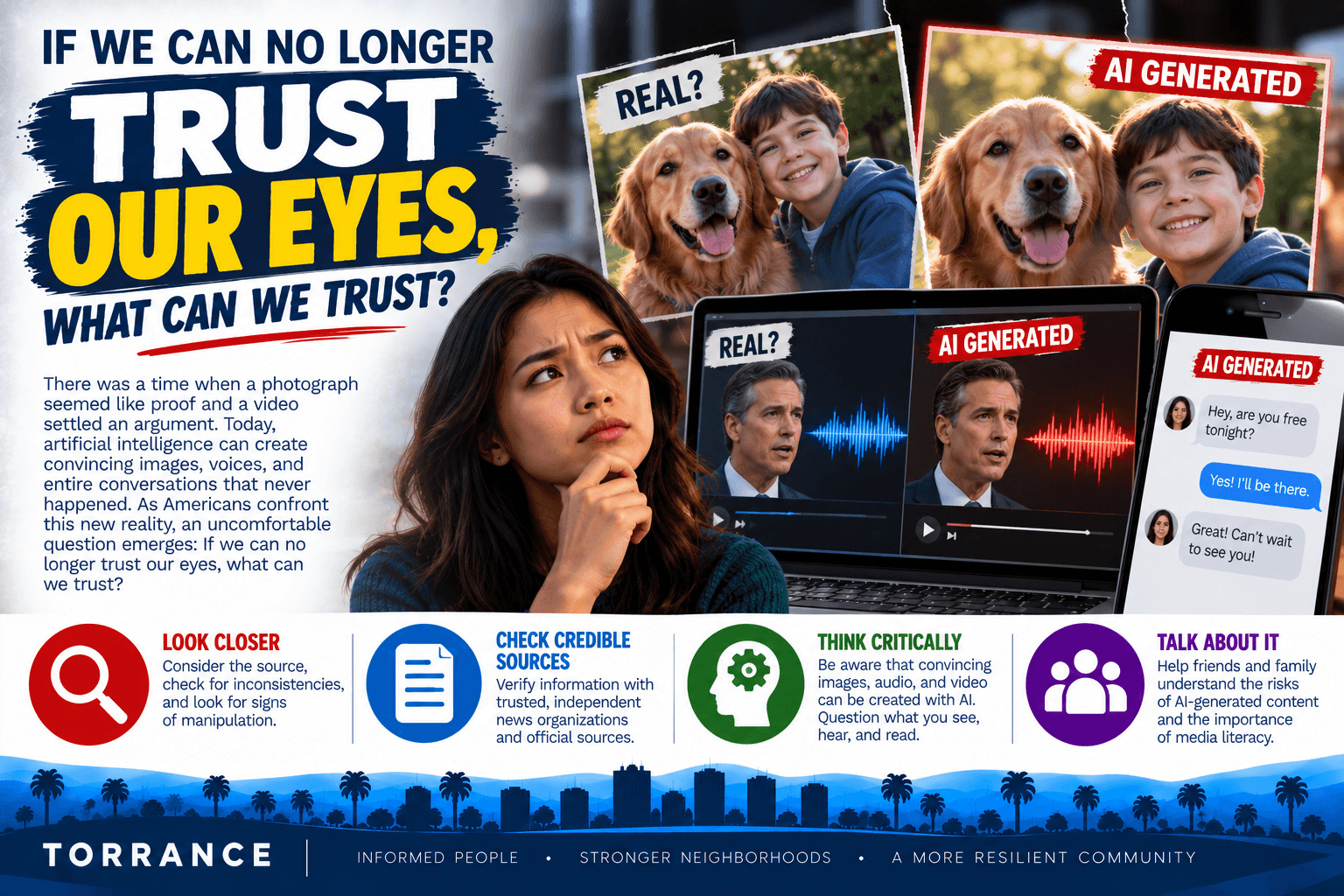
The End of "I Saw It With My Own Eyes" For generations, four simple words were enough to settle many arguments: I saw it myself. A photograph captured a moment. A recording preserved someone's voice. A video showed what happened. Of course, images and recordings could always be manipulated. But doing so generally required specialized skills, expensive equipment, or considerable effort. Today, almost anyone with a computer can create a realistic image of an event that never happened, produce a convincing imitation of someone's voice, or generate a video showing a person saying words they never spoke. And the technology keeps improving. The Problem Isn't Just Fake Content What's troubling isn't simply that artificial intelligence can manufacture convincing material. It's what happens to trust when people begin questioning everything. Imagine watching a video of a public official making an outrageous statement. Is it genuine? Edited? Completely fabricated? Now consider the opposite possibility. What happens when someone caught on a legitimate recording claims it was generated by AI? Suddenly, technology creates two problems at once. Falsehoods can look real, and reality can be dismissed as false. We're Already Experiencing the Uncertainty In a national survey, Pew Research Center found that 76% of Americans believe it's extremely or very important to know whether content was created by artificial intelligence or by a person. Yet 53% said they were not confident they could reliably tell the difference. Those numbers reveal something important. Americans recognize the problem, but many aren't sure they're equipped to deal with it. And this isn't limited to politics. It affects advertising, financial scams, celebrity endorsements, social media, journalism, and even personal relationships. But Artificial Intelligence Isn't the Enemy AI has extraordinary potential. It can assist medical researchers, help small businesses compete, improve accessibility, support education, and make complicated information easier to understand. The problem isn't that technology can create remarkable things. It's that technological capability is advancing faster than many of our habits for evaluating information. We've become accustomed to receiving answers immediately. But perhaps we need to become more comfortable asking questions first. Who created this? Where did it come from? Can another trustworthy source confirm it? Does the claim make sense outside the emotional reaction it's trying to provoke? A Little Skepticism Can Be a Good Thing We don't need to become suspicious of everything or cynical about everyone. We do need to recognize that seeing something on a screen is no longer sufficient evidence that it happened. Before sharing a sensational video, an unbelievable photograph, or an inflammatory statement, take a moment to verify it. Look for the original source. Check whether reputable organizations are reporting the same information. And remember that something can be visually convincing without being factually true. These small habits may become some of the most important digital skills we can teach the next generation. The Question Worth Asking Technology will continue changing how we communicate and understand the world. We probably can't stop that transformation, and we shouldn't automatically want to. But we can decide how thoughtfully we respond. Perhaps the greatest challenge of the AI era won't be teaching machines to become more intelligent. It will be making sure humans don't surrender their own judgment in the process. And that's something worth thinking about. — The Torrance Buzz Weekly Explore the research in Pew Research Center's report on Americans' views of artificial intelligence.
|
0 Comments
Join the conversation
Be the first to comment
Share your thoughts above.