
Torrance’s Housing Dashboard Reveals Major Residential Projects |
An interactive City map helps residents track substantial housing proposals and see where new development is moving through the review process. |
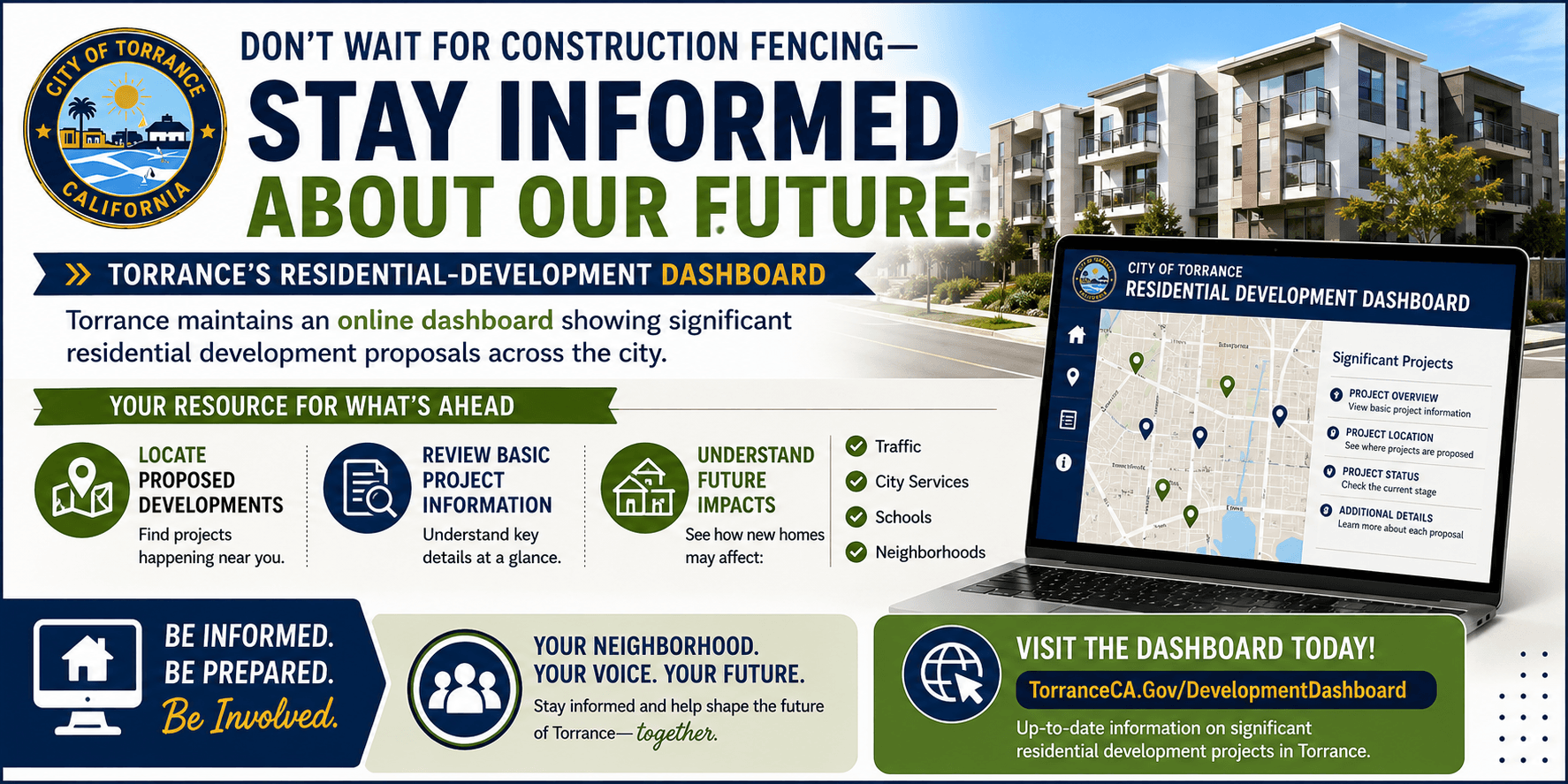
A large housing development can spend months or years moving through planning and review before the first construction vehicle arrives.
Torrance residents can follow many of those proposals through the City’s Major Residential Development Project Dashboard.
The interactive resource is part of the Community Development Department’s collection of major-project and quarterly-development reports. It provides a citywide view of substantial residential proposals rather than requiring residents to search through individual meeting agendas or permit records one property at a time.
Depending on the project and its stage, residents may be able to review information such as:
The dashboard is particularly useful for homeowners who see activity near an underused commercial property, vacant parcel, former industrial site, or aging apartment complex and want to understand what may be proposed.
A listing on the dashboard does not necessarily mean a project is fully approved or ready for construction.
Residential developments may pass through several stages, including initial application, staff review, environmental analysis, Planning Commission hearings, City Council consideration, building-plan review, and permit issuance. Some proposals are modified, delayed, withdrawn, or replaced before completion.
Residents should therefore read the stated project status carefully.
The dashboard can also help homeowners identify questions worth asking before a public hearing:
Project information should be treated as a starting point rather than the complete record. Detailed plans, environmental documents, staff reports, conditions of approval, and public comments may appear separately through Planning Commission or City Council materials.
Torrance’s Planning Commission conducts public hearings on land-use and development matters, generally meeting on the first or third Wednesday when sessions are scheduled.
Residents who discover a nearby project should note its application number and location. Those details make it easier to contact the Planning Division, follow future agendas, and request the correct public documents.
The dashboard gives homeowners something valuable: time. Learning about a proposal early allows residents to review facts, organize questions, and participate before major decisions are complete.
Article Link |
0 Comments
Join the conversation
Be the first to comment
Share your thoughts above.