
How Much Privacy Would You Trade for Safety? |
License-plate cameras may help solve crimes faster — but they also raise a bigger question about who gets to track where we go. |
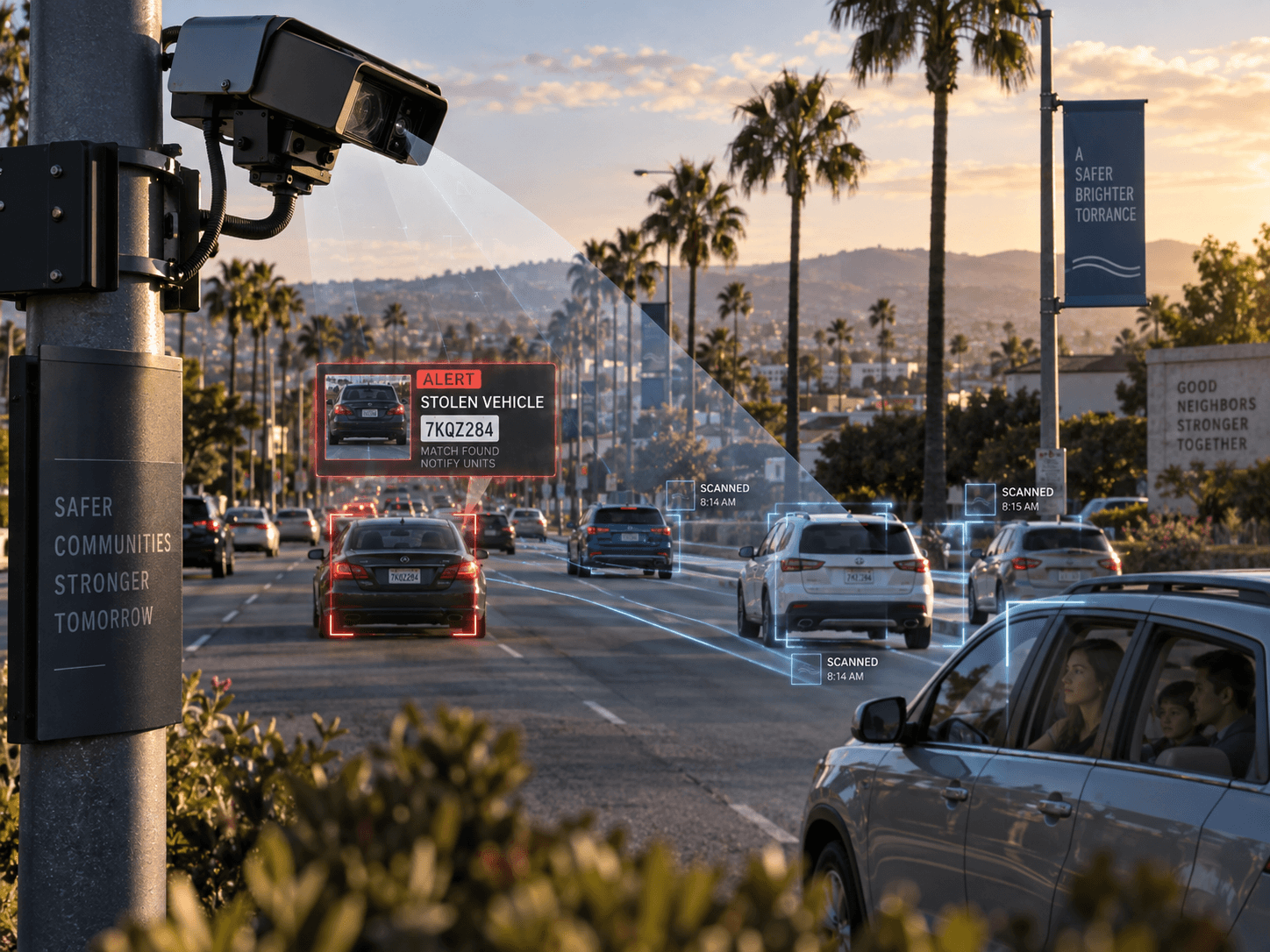
License-plate cameras can help police solve crimes. They can also create a remarkably detailed record of where we go. Where should we draw the line?
There’s a good chance you’ve driven past one without giving it a second thought.
Automated license-plate readers, or ALPRs, photograph passing vehicles, read their license plates and make that information searchable by law enforcement. They can help police locate a stolen car, find a wanted suspect or piece together where a vehicle traveled before or after a serious crime.
That sounds like exactly the kind of technology we want police to have.
Until you consider what else the technology can do.
These cameras don't know whether you are a criminal when you drive past them. They collect information on ordinary people going to work, taking their children to school, visiting a doctor, attending church, meeting friends or simply driving home.
And that raises a question I think is becoming increasingly important:
How much of our privacy are we willing to give up in exchange for greater public safety?
This question has moved into the national spotlight because of Flock Safety, one of the country's largest providers of automated license-plate-reader technology.
Police departments argue that systems like these can be extremely valuable investigative tools. And I understand that argument.
If my car were stolen, I would want police to find it.
If a child were missing, I would want law enforcement using every reasonable tool available.
If someone committed a violent crime and fled in a vehicle, I certainly wouldn't object to cameras helping police find that person faster.
But technology this powerful needs boundaries.
This summer, the Los Angeles Police Department stopped using Flock's system while officials raised questions about who controls the information, who can access it and how it can be shared. LAPD officials also described the technology as a valuable investigative tool — which illustrates the dilemma perfectly.
Meanwhile, Flock has responded to growing privacy concerns by announcing additional safeguards, including a shorter seven-day default retention period for new law-enforcement customers, required case codes, stronger auditing and additional controls intended to detect misuse.
So this isn't necessarily a simple debate between people who support law enforcement and people who support privacy.
You can support both.
Here in Torrance, this discussion deserves our attention too.
The Torrance Police Department's Real Time Response Center says it has deployed nearly 100 license-plate-reader cameras, along with access to hundreds of live video streams and other public-safety technology.
That may make Torrance safer.
But residents should also be able to ask reasonable questions.
How long is our license-plate information kept?
Who can search it?
Can another police department search Torrance's records?
Under what circumstances can information be shared outside Torrance?
Does every search require a documented law-enforcement purpose?
Who audits the system to make sure someone isn't using it improperly?
And perhaps most importantly, where should the boundary be?
I don't think the answer is to reject technology simply because it creates privacy concerns. Police should have modern tools capable of helping them protect our community.
But I also don't believe public safety should require giving government unlimited ability to reconstruct the movements of ordinary citizens.
The better answer may be somewhere in the middle:
Use the technology — but put strong, transparent rules around it.
Require legitimate investigative reasons for searches. Keep information only as long as necessary. Audit who accesses it. Restrict unnecessary sharing. And make the policies available for the public to see.
Technology changes much faster than laws and public policy.
That's precisely why these conversations need to happen before powerful surveillance tools simply become another part of everyday life that nobody thinks about anymore.
So this week, I'd really like to hear what you think through the quiz. |
0 Comments
Join the conversation
Be the first to comment
Share your thoughts above.