
Do You Know Your Numbers? Four Health Measurements Worth Paying Attention To |
High blood pressure, high cholesterol and rising blood sugar can develop quietly—long before someone feels sick. |
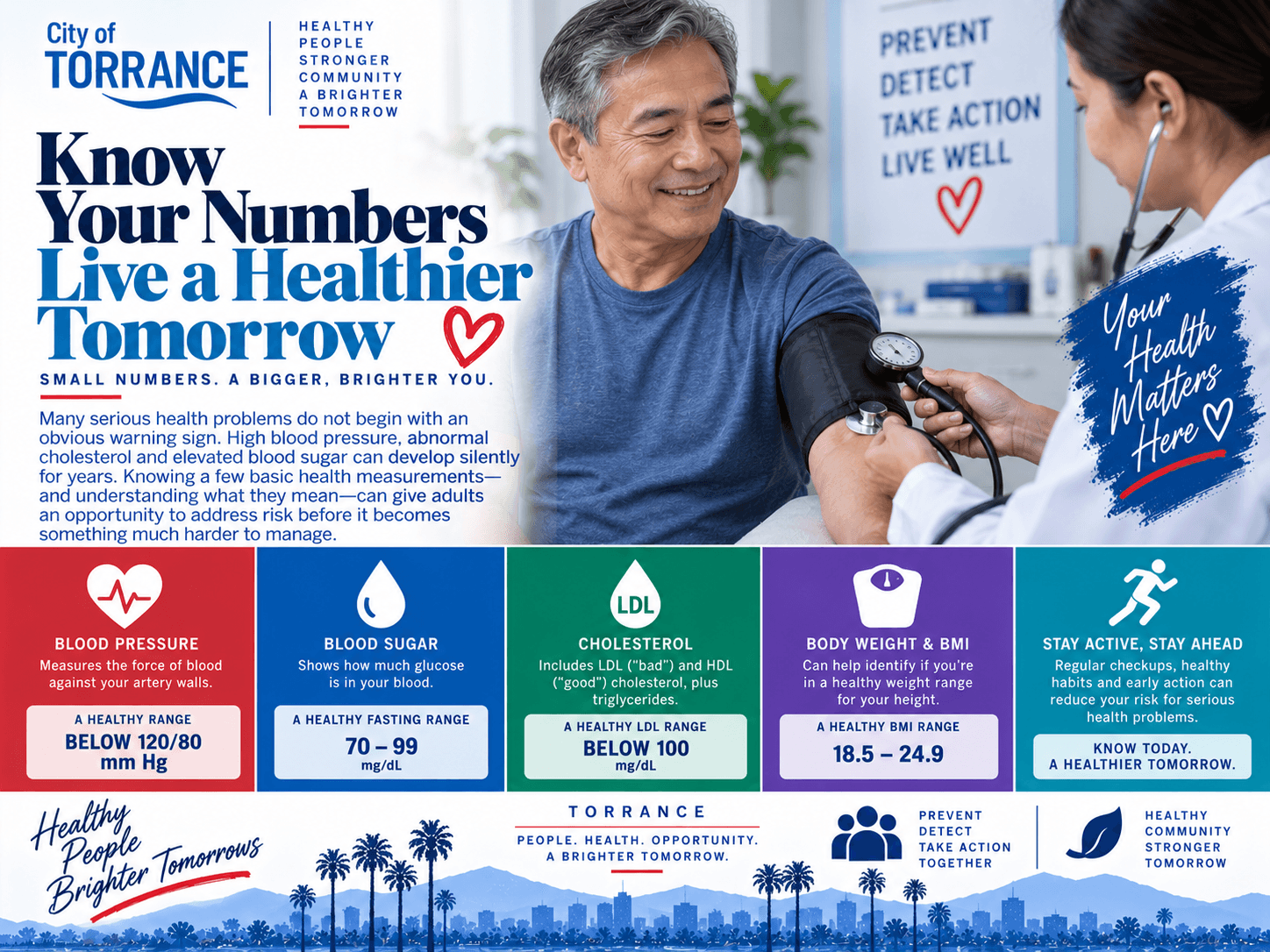
Most of us know our phone number.
Many know their credit score.
But ask someone their most recent blood pressure, LDL cholesterol or A1C, and the answer is often less certain.
Those numbers may deserve considerably more attention.
Several of the conditions that contribute to heart attack, stroke, kidney disease and diabetes can develop quietly, without creating obvious symptoms in the early stages.
That makes routine screening unusually valuable.
Here are four numbers worth discussing with your healthcare professional.
1. Blood Pressure
High blood pressure is one of the most important—and most easily overlooked—cardiovascular risk factors.
The U.S. Preventive Services Task Force recommends blood-pressure screening for all adults 18 and older. For adults 40 and older, or people at increased risk, annual screening is considered reasonable.
One reading, however, does not always tell the whole story.
Blood pressure can rise temporarily because of stress, activity or even anxiety in a doctor's office.
That is why the USPSTF recommends confirming an elevated office reading with measurements taken outside the medical office before diagnosing hypertension and beginning treatment.
2. A1C or Blood Sugar
Blood sugar can also rise gradually without producing obvious symptoms.
An A1C test estimates average blood glucose over the previous several months and is one of the tests doctors use to identify prediabetes and type 2 diabetes.
The USPSTF recommends screening adults 35 to 70 who have overweight or obesity for prediabetes and type 2 diabetes. Depending on family history and other risk factors, screening may be appropriate earlier for some people.
The encouraging part is that identifying prediabetes does not necessarily mean diabetes is inevitable.
Evidence supports interventions involving nutrition, physical activity and weight management that can reduce progression to type 2 diabetes.
3. LDL Cholesterol
Cholesterol is not one number.
A standard lipid panel typically measures several values, including LDL, HDL and triglycerides.
LDL is frequently called “bad cholesterol” because elevated levels can contribute to fatty deposits inside arteries.
But doctors do not evaluate LDL in isolation.
Age, blood pressure, smoking, diabetes and other factors help determine a person's overall cardiovascular risk and whether treatment may be appropriate.
For many adults, the American Heart Association says checking cholesterol roughly every five years can be a starting point, although testing may be needed more frequently depending on individual risk.
4. Your Overall Cardiovascular Risk
This may be the least familiar “number” of all.
Healthcare professionals can combine information such as age, blood pressure, cholesterol, diabetes and smoking history to estimate a person's risk of having a cardiovascular event in the coming years.
That matters because the decision to treat cholesterol, for example, may depend more on someone's overall risk than on one laboratory value alone.
USPSTF recommendations for preventive statin treatment specifically consider both cardiovascular risk factors and an estimated 10-year risk of heart attack or stroke.
Don't Turn the Numbers Into a Competition
There is an important caution here.
Health numbers are useful because they help guide decisions—not because everyone should chase the same supposedly “perfect” result.
Age, medications, existing medical conditions and personal history can all change what a particular measurement means.
That is why an internet chart should never replace a conversation with a healthcare professional who knows the patient's complete medical history.
Health Watch Bottom Line
The most dangerous number may be the one you never measured.
You do not need to obsess over every laboratory result.
But knowing your basic blood pressure, blood sugar and cholesterol measurements—and discussing what they mean in the context of your overall health—can reveal problems long before symptoms force your attention.
At your next routine appointment, one simple question can start the conversation:
“Are there any health numbers I should be watching more closely?”
That is a much better time to discover a problem than after it has become an emergency.
Article Link: USPSTF: Preventive Health Recommendations |
0 Comments
Join the conversation
Be the first to comment
Share your thoughts above.